
How Long Do Tires Last? Lifespan Guide
If you’re wondering how long tires last, you’re already thinking like a smart vehicle owner. Tire lifespan isn’t just about mileage. It’s a direct reflection of driving habits, road conditions, and how well your vehicle is maintained.
For drivers in the Dallas-Fort Worth area, where heat, highway driving, and stop-and-go traffic all come into play, understanding tire longevity and how tire shops can help will save you money and prevent avoidable safety risks.
This guide breaks down the real numbers, what affects tire wear, and how services like rotation and alignment extend tire life.
Average Tire Lifespan: What to Expect
Most modern tires are designed to last:
- 50,000 to 70,000 miles under normal driving conditions
- Three to six years, depending on usage and environment
That said, these are ideal estimates. In real-world conditions, many drivers replace tires sooner due to uneven wear, road damage, or neglected maintenance.
Mileage vs. Time: Which Matters More?
Both matter, but time is often overlooked.
- Rubber compounds degrade over time, even if the tread depth looks acceptable.
- Heat (especially in Texas) accelerates this breakdown.
- After six years, most manufacturers recommend inspection regardless of mileage.
Bottom line: A tire can “look fine” but still be unsafe.
What Actually Determines How Long Tires Last?
Tire lifespan isn’t random. It’s driven by a handful of key variables.
Driving Habits
Aggressive driving is one of the fastest ways to shorten tire life.
- Hard braking leads to uneven tread wear.
- Rapid acceleration >can cause excessive heat buildup.
- High-speed cornering may contribute to sidewall stress.
Consistent, controlled driving can easily add 10,000+ miles to a set of tires.
Road Conditions in Dallas-Fort Worth
DFW roads introduce a mix of challenges:
- Hot pavement increases rubber wear.
- Construction zones add debris risk.
- Urban driving creates frequent stop/start cycles.
These factors collectively accelerate tread degradation compared to milder environments.
Tire Maintenance (The Biggest Factor)
Many drivers lose tire life without realizing it by ignoring maintenance recommendations. Proper maintenance includes:
- Routine inspections
- Correct tire pressure
- Scheduled rotations
- Alignment checks
Neglect even one of these, and tire lifespan drops significantly.
Tire Rotation vs. Wheel Alignment: Why It Matters
Understanding the difference between tire rotation vs. wheel alignment is essential to proper tire care.
Tire Rotation
- Moves tires between positions (front to rear, side to side)
- Promotes even tread wear
- Typically recommended every 5,000-7,500 miles
Wheel Alignment
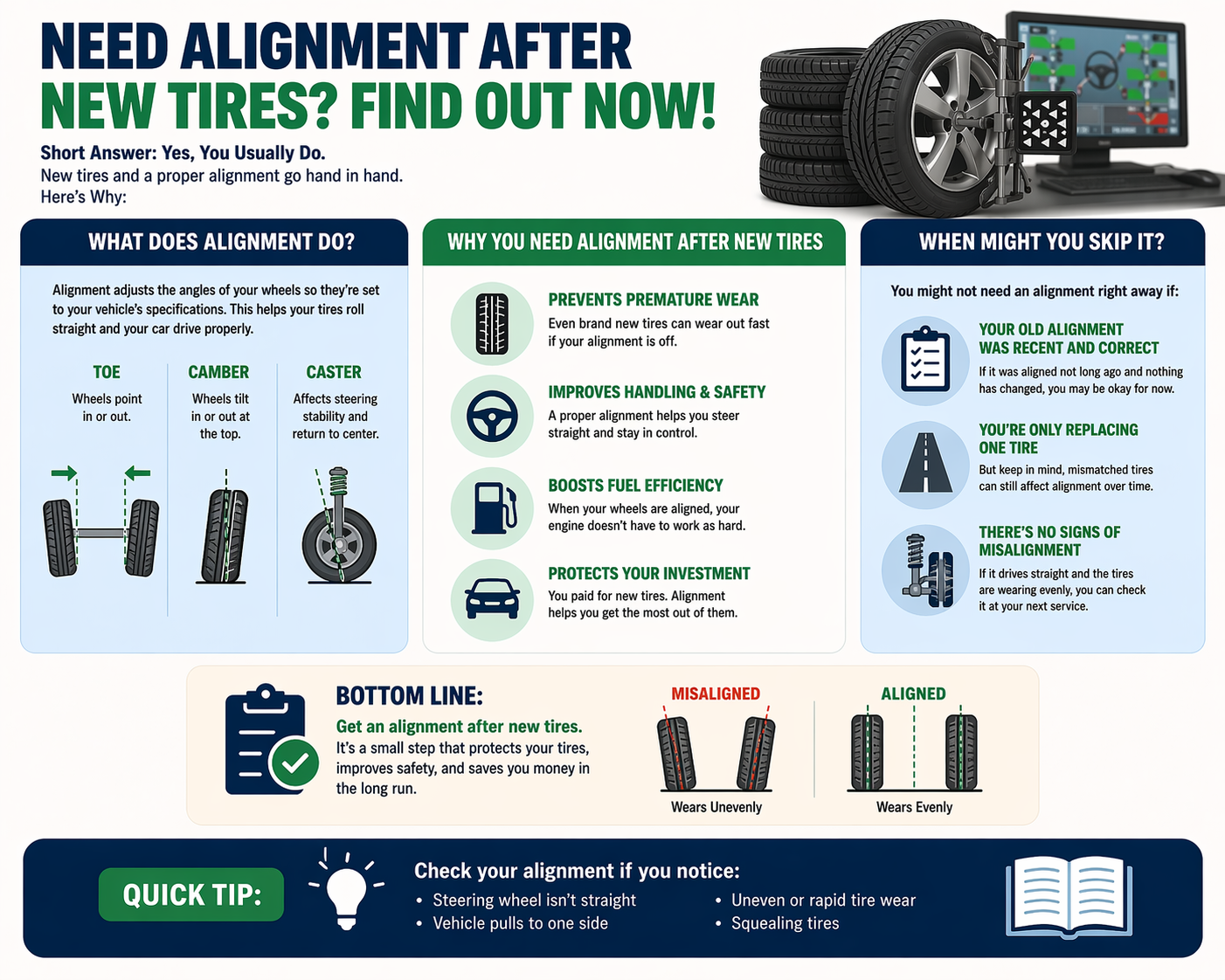
- Adjusts suspension angles (camber, caster, toe)
- Ensures tires contact the road correctly
- Prevents premature and uneven wear
The Reality
You don’t choose between them. You need both.
- Rotation prevents wear imbalance caused by drivetrain differences.
- Alignment prevents geometric wear caused by suspension issues.
Skipping either service leads to early tire replacement, often thousands of miles sooner than expected.
Signs Your Tires Are Wearing Out
Ignoring early warning signs is how small issues turn into expensive replacements. Watch for:
- Tread depth below 2/32 inch (legally worn out)
- Uneven wear patterns (feathering, cupping, edge wear)
- Vibration at highway speeds
- Cracking or dry rot on sidewalls
- Frequent loss of air pressure
If you notice any of these, it’s time to visit a trusted tire shop or auto service center.
How to Extend the Life of Your Tires
If you want to push your tires toward the higher end of their lifespan, these are non-negotiable.
Maintain Proper Tire Pressure
Underinflation causes:
- Excessive heat
- Sidewall flexing
- Faster tread wear
Overinflation reduces contact area and leads to uneven wear. Check pressure monthly, not just when something feels off.
Rotate Tires on Schedule
Front and rear tires wear differently, especially on front-wheel-drive vehicles. Routine rotation:
- Balances wear patterns
- Prevents premature replacement of one axle
- Maximizes total tire lifespan
Get Regular Alignments
Even slight misalignment can:
- Scrub tread off quickly
- Reduce fuel efficiency
- Affect vehicle handling
If your steering wheel isn’t centered or the car pulls to one side, don’t wait. Get it checked.
Choose the Right Tires for Your Driving
Not all tires are built the same.
- Touring tires: Longer lifespan and smoother ride
- Performance tires: Better grip, shorter lifespan
- All-terrain tires: Durability, but varied wear depending on use
A knowledgeable auto service center can match your driving needs with the right tire type.
Why Tire Replacement Timing Matters
Waiting too long to replace tires isn’t just a maintenance issue; it’s a safety risk. Worn tires reduce:
- Traction (especially in wet conditions)
- Braking performance
- Vehicle stability
At highway speeds, that margin of safety disappears quickly. Replacing tires at the right time keeps your vehicle predictable and controlled, especially during emergency maneuvers.
Why Drivers Trust Car Concepts for Tire Service
When it comes to tire longevity, the shop you choose matters. Car Concepts Tire & Auto serves drivers across Dallas-Fort Worth with:
- ASE Certified Technicians trained in modern diagnostics and repair
- AAA-certified service standards for trusted workmanship
- Full-service capabilities, from tire replacement to advanced vehicle repair
- A team that prioritizes long-term vehicle reliability, not short-term fixes
With multiple locations and factory-trained personnel, Car Concepts operates as a true full-service tire shop and auto service center, capable of addressing everything from routine tire rotation to complex alignment issues.
If you’re unsure about the condition of your tires, don’t guess. Get them inspected by professionals who understand how to maximize lifespan and keep your vehicle safe on the road.